Posted by: Majestic Northeast Tours and Adventures
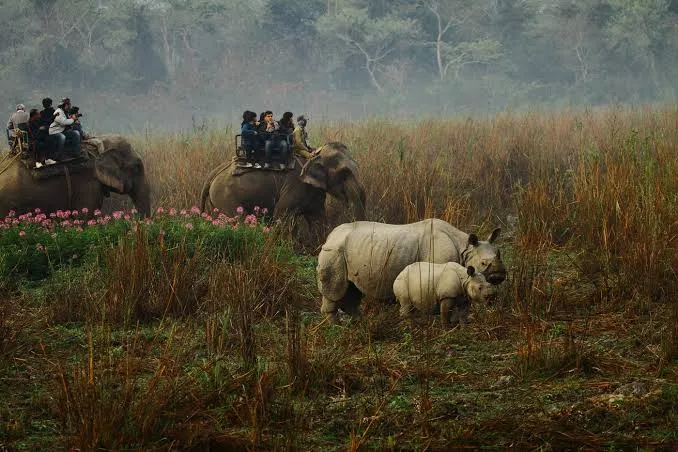
Imagine standing in an open-top jeep as the morning mist
slowly lifts over a blanket of tall elephant grass. Out of the haze, a massive,
armor-plated silhouette appears, quietly grazing just meters away. You are
looking at the prehistoric Indian One-Horned Rhinoceros in its true kingdom: Kaziranga
National Park.
Nestled in the fertile plains of Assam along the mighty
Brahmaputra River, Kaziranga is a UNESCO World Heritage Site and one of the
world's most successful wildlife conservation stories. Holding over two-thirds
of the global population of the great Indian one-horned rhino, this pristine
sanctuary is a bucket-list destination for every true explorer.
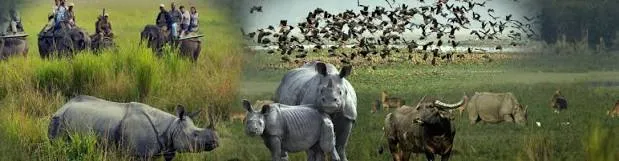
Meet Kaziranga’s "Big Five"
While Africa has its famous safari lineup, Kaziranga boasts
its own spectacular Big Five. The unique marshy grassland ecosystem
supports an incredibly dense population of large mammals:
- The
Great Indian One-Horned Rhinoceros: The undisputed star of the show.
- The
Royal Bengal Tiger: Kaziranga features one of the highest densities of
tigers in the world, though the tall grass makes spotting them a thrilling
game of patience.
- The
Asiatic Elephant: Large herds can often be seen ambling across the
fields or crossing the park tracks.
- The
Wild Water Buffalo: Home to the largest population of this majestic,
massive-horned species.
- The
Swamp Deer (Barasingha): Beautiful, elegant deer found gracefully
wading through the wetlands.
Decoding the Safari Zones
To make the most of your adventure, it helps to understand
the park's four distinct safari ranges. Each offers a completely unique
landscape and experience:
|
Range / Zone |
Best Known For |
Vibe & Experience |
|
Central Range (Kohora) |
Maximum rhino sightings & water bodies |
The most popular zone; excellent balanced biodiversity. |
|
Western Range (Bagori) |
Elephant sightings & deep rhino close-ups |
High wildlife density, highly photographic. |
|
Eastern Range (Agaratoli) |
Migratory bird watching & woodland trails |
A tranquil paradise for birders; home to nesting storks
and eagles. |
|
Burapahar Range |
Hoolock Gibbons & rugged landscape |
Less crowded, perfect for trekking on the fringes and
spotting primates. |
Knowing When to Go
Because the Brahmaputra River completely floods the plains
during the monsoon to rejuvenate the ecosystem, timing your trip is crucial.
The Safari Window: Kaziranga is officially open to
travelers from November to April.
- November
to February (The Winter Chill): The absolute peak season. The weather
is cool and pleasant, morning
fog creates ethereal photography conditions, and migratory birds cover the
lakes.
- March
to April (The Tracker’s Sweet Spot): As spring sets in, the tall grass
dries up or is managed by the forest department, drastically increasing
your visibility. Animals frequently gather around shrinking waterholes,
making this the prime window for elusive tiger sightings.
Essential Travel Tips for a Smooth Journey
- Book
Your Safaris Early: Jeep safaris fill up weeks in advance, especially
during winter weekends. Always plan ahead to secure your preferred range.
- No
Inner Line Permit (ILP) Required: Unlike some neighboring northeastern
states, domestic and foreign travelers do not need special entry permits
to visit Assam or Kaziranga, making logistics incredibly straightforward.
Explore the Fringes: Don't just stick to the park! Take an afternoon to walk through the aromatic Hathkuli Tea Estate or visit the nearby Kaziranga Orchid and Cultural Park to sample local Assamese cuisine and see traditional tribal dances.